Thursday, October 28, 2010

INTERVALS-Nov/Dec 2010

FEATURE ARTICLE: A STEADY BAND-WHY SO IMPORTANT?
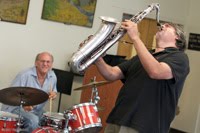
This fall has seen my regular working quartet hitting pretty hard in the U.S., something which is a rarity these days. You can see from the itinerary in the last newsletter that we made some stops on the West Coast and in the New England area. Also, the DL Big Band had a few hits and my band is the rhythm section for that group also. As a capper, we have a Europe tour coming up in December. So, this is quite a nice run which with constant playing inevitably opens musical doors both as a group and individually. In essence the machine has a chance to get oiled and run full throttle. This flurry of activity has lead me to re-think why it has always been a top priority to maintain the same personnel throughout my career. In this case it has been nearly twenty years with bassist Tony Marino and guitarist Vic Juris and ten with drummer Marko Marcinko. In fact, I have had only three other steady groups in a 36 year period which in the jazz business is rather unusual.

I formed the Dave Liebman Group after Quest (Richie Beirach, Ron McClure, Billy Hart) which took up most of the 1980s. The original formulation was alongside Tony and Vic, Jamey Haddad on drums/percussion and Phil Markowitz on piano/ keyboards. My initial concept was to play more programmatic, written music than previously with Quest. I also wanted to delve more into odd meters and rhythm in general, in light of the emphasis during the Quest period where the material focused so much on the harmonic language that Richie and I developed over the decades. In 1997, the piano departed and a few years later Haddad left for Paul Simon’s gig, so Marko came aboard. With the absence of the keyboard, Vic Juris had to seriously step up to the plate, which he has more than accomplished. In fact I have never heard a musician grow more than Vic did in these decades. He is serious, hard working and full of talent. And as a human being, Vic is the nicest person to be around as well.

With the departure of Markowitz I directed the music towards a freer harmonic and more open rhythmic concept. Repertoire-wise this meant a lot of time/no changes formats, rubato and occasional odd meter. But the primary emphasis was definitely towards the conversation taking place between the guitar and myself, rather than purely soloistic. Now in 2010, we have been moving into a more color oriented stage, meaning increased use of sound and ambiance. Tony is now playing exclusively electric bass; I am only playing soprano (harkening back to the long hiatus I took from the tenor between 1980 and 1995) and Vic is all over the place sonically speaking. The three of us are using a variety of pedals and effects with Marko employing hand percussion instruments along with the drums. One could say that an emphasis on atmosphere is where we are at present.

Considering the material itself over the years, I think it is quite clear to anyone who has followed my development (and I would venture to say the following is more or less true of most artists), that what you play near the beginning of your career forms the foundation for everything after that. Of course it is juggled around and transformed, but the basic sound that one hears at the commencement of creative work seems to more or less form the basis of an artist’s entire oeuvre. Although from my generation onwards (growing up musically in the ‘60s and career-wise in the ‘70s), the jazz repertoire became much more eclectic than previously using a wider variety of idioms and styles rather than the customary blues, rhythm and standard tunes, the fact remains that you are what you are musically. One could say that even in the case of Miles Davis who on the surface traversed many styles over forty years, common stylistic aspects remained throughout his life. There is a certain “essence” that usually appears in its raw form at the beginning, probably without much cognizance or sophistication, but very real nonetheless. The challenge for a long artistic life is how to refine that essence and transform it over the years so it remains fresh and vital. In more than a few ways the music I have played with the present Dave Liebman Group over the past twenty years is quite similar to the material on my first recording as a leader on ECM titled “Lookout Farm” (1973).

DL Group at Fisherman's Wharf, San Francisco

Back to the subject, the most obvious reason for maintaining the same personnel is that time spent together both on and off the bandstand builds trust and confidence. Musically this means that whatever one plays, you know it is real and not a false or selfish gesture. You accept what your mates play as the best they can do at the time and move on from there. In other less permanent situations, a moment of doubt may surface as to why someone played something. Did it happen because of musical reasons or personal ego or other extraneous factors? Granted that great musicians can come together on a one night or short term basis and create some interesting music. But when a band has a history it’s apparent, certainly to the listener without them necessarily being consciously aware of it. They feel something beyond the ordinary happening. There is one more important reason for keeping steady personnel. In retrospect it was through observing Miles Davis as a leader that I learned the following.

The main task when leading a band is to recognize in your sidemen what they do best. One must of course first realize what you personally do best musically. I would imagine by the time one is a bandleader they would know that about themselves. You can’t expect others to latch on to something if you don’t have it well formed at least in your own head, if not on paper. This “knowing oneself” is a purely objective exercise …there is no “would’ve,” “could’ve” or “should’ve” …no conditional tense please!! Just objective observation. Then, because jazz is the most democratic of all music, you have to find partners who can and want to enhance what you hear.

With Miles, it seemed that he could hear what he wanted out of you even if the so-called “audition” was musically totally unrelated to what his music was at the time. He heard Dave Holland with a singer playing standards; he heard Al Foster playing bebop with Walter Bishop at a club called the Cellar on 96th Street in New York; he heard me playing with Steve Grossman in a double quartet free jazz gig at the Scene on 46th Street in Manhattan. What all of us ended up playing with Miles had nothing to do with any of these musical settings. If you think about a lot of Miles’ sidemen, the way they played during their tenure with Miles was never heard again in their future music.

Once you find these right partners, the leader has to create the circumstances for this combination to blossom and realize the sound in his head. This means several things: keeping the music challenging and exciting in order to pique the interest of your sidemen; finding opportunities to play in order to satisfy the necessity of making a living; and creating a workable social environment since there is hopefully a lot of time spent together touring and recording…if the group is successful which is the obvious objective. When everything is synching up, the music has a chance to go beyond the mundane. This takes a lot of work, good timing and a bit of luck…all factors that go into any successful business undertaking.

Like any long term relationship (marriage being a good metaphor), there are emotional and relational ups and downs which naturally occur. There is also the “boredom” factor, meaning knowing too well how someone reacts to a given musical situation, which can potentially take away from what true improvisers look for on a daily basis, playing something new and fresh, not by rote. True jazz musicians are very sensitive to mechanical playing. We are supposed to be in the moment without a past or future, in the now. Too much predictability can bring the level of the musical discourse down. We try to achieve a balance between the expected and the surprise gesture. Accepting the inevitability of at least some repetitious playing when you are with the same musicians for awhile is important. Ultimately with the right people, the group moves beyond, concentrating rather on the positive which is something played that is fresh music. With patience, time will take care of these matters. When that happens there is a feeling of accomplishment, of having passed through something together which strengthens the band and the music. It goes without saying that finding the right people to fit into this scenario is no mean feat!!

For me, it was the power of their steady groups that artists like Coltrane, Miles, Monk, Blakey and others from that era had going which most affected me most as a listener. I urge musicians to do their best to sustain long term relationships. The rewards are worth it. To my guys, I say thanks for the loyalty and trust you have given me. Two very accurate reviews about our Los Angeles performance appear at the end of this newsletter.

NEW RELEASES
QUEST FOR FREEDOM(SUNNYSIDE RECORDS)
with Richie Beirach and the HR Big Band arranged by Jim McNeely: This could be one of my best recordings for a few reasons. It was taped in Frankfurt with the HR Big Band (one of the great German radio bands that still are active in jazz) under pristine conditions and a great German engineer (Axel Gutzler). The repertoire consisted of arrangements of several of my more chromatic compositions, one by Richie, a song that we have been playing for years, “Pendulum,” an arrangement by former student Heiner Schmitz of my tune for 9/11 titled “WTC;” and one amazing twelve tone piece by McNeely (“Sky’s The Limit”). Those in the business know how deep Jim is as an arranger and musician. With Richie and myself together, this music is an orchestration of our duo’s harmonic language, something Jim is completely in tune with. Not to mention the incredible performances (combination of live and studio) by the Hesse Rundfunk Big Band. I am very proud of this recording.


LIEB ON FACEBOOK:Incredible, but I'm finally joining the brave new world. The whole social-network thing is just too big to ignore for artists. I now have a social media presence on the internet: Facebook, MySpace and Twitter pages, all linked into a Dave Liebman network. And I am amazed at the number of YouTube videos you can find with my name on them. I have to thank Michael Crowell for taking care of this. And while I’m at it I have hired a great PR person, Ann Braitwaite, for a several month period to take advantage of the NEA award as well as Todd Brown and Zak Weil to keep my web site up. One has to strike while the iron is hot!!

RECENT ACTIVITIES

BIRDLAND WITH STEVE SWALLOW,STEVE KUHN AND BILLY DRUMMOND:
The club Birdland in the Apple has begun a five night policy which is as close to the old days as possible (not withstanding only two sets). What a pleasure to play with giants of this caliber over nearly a week. Kuhn of course has been a fixture for decades playing with Trane and everyone else around the world. He is a consummate musician with a beautiful touch and a true understanding of the tradition. When he was doing club dates (the kinds of gigs referred to as “GB”….general business) for awhile, he played my wedding reception with Caris in 1986 at Garvin’s Restaurant in the Village using a trio and a great singer who did all the ‘50s tunes. (If a bomb had gone off that day, the NY jazz scene would’ve been decimated!!) Billy D is one of New York’s first call drummers….meaning the job is taken care of perfectly. Swallow and I go back to my first playing experiences with Bob Moses and Pete LaRoca in the ‘60s. This is a one of a kind guy musically and personally. People often refer to him as the Prince, because of his unending generous spirit, both musically and personally, not to mention his absolutely perfect playing and compositional sense. Steve writes in a style like Bach, flowing, a unified thought throughout, easy in some ways, but tricky in others. Here’s what I wrote on Facebook about him:
"Just finished five nights at Birdland in the Apple (by far the best place to hear jazz in NY), playing with pianist Steve Kuhn, drummer Billy Drummond and one of the most "perfect" musicians in jazz, bassist Steve Swallow. Younger fans may not know that Steve of course played upright bass in the 1960s working with everyone before converting to electric bass. He plays with a pick more like a guitar (when he solos) then a bass. The sound he gets in the upper register is beautiful, light and lyrical. When I say "perfect," I mean every solo is a gem with the best voice leading, chord change playing and melodic shapes that one could imagine. Following a solo of Steve Swallow is quite a challenge!! Not to mention his incredibly beautiful compositions, several which we played for this gig. He is one of my oldest associates going back to my first mentor's group, drummer Pete LaRoca's Band that also featured Chick Corea in 1969. One of the all time greats----Steve Swallow."


RECOMMENDED

YOU TUBE CLIPS

“PEACE ON EARTH” PERFORMED BY PARTICIPANTS AT 20TH ANNIVERSARY IASJ MEETING (JULY-DEN HAAG): You can see all the participants (over 100 people) playing and singing in a giant version of Trane’s beautific song and sentiment:
http://www.youtube.com/watch?v=Ff1kVAVfIeM

IASJ students, faculty, teachers and administrators performing "Peace On Earth"


BEN WEBSTER WITH TEDDY WILSON (UPON HEARING OF JOHNNY HODGES’ PASSING): If you want to feel what the jazz brotherhood is about check this out. Besides the playing which as you can imagine is sublime (“Old Folks”), the emotion that you see in Ben’s face is beyond words: http://www.youtube.com/watch?v=rQVVLAO-9LU

THE JOY OF MUSIC: A perfect complement to the Ben Webster clip, here is the joy of music in another way—absolutely one of the cutest things you will ever see-a four year old boy conducting Beethoven: http://www.youtube.com/watch?v=0REJ-lCGiKU&feature=email

MISCELLANEOUS CLIP ON OUR WORLD: From Sony, an impressive look into what is happening around us with information and technology….a lot of numbers to scare us, but the final statistic about how many illegal downloads happened in the time you view the clip is pretty wild. You have to watch this to know what I mean:
http://www.youtube.com/watch?v=cL9Wu2kWwSYW

KENNY WERNER: Most of you are familiar with pianist/composer Kenny Werner, if only for his book “Effortless Mastery” which has been widely read. A few years ago, Kenny and his wife suffered what has to be the most tragic event parents can go through…. the death of their 16 year old daughter in a car accident. This recording which features Joe Lovano at some of his best and wife Judi Silvano, is as deep as it gets. Even if I didn’t know the inspiration for the why the music was written and recorded, it would still be some of the best stuff I’ve heard in years for orchestra, voices, string quartet, etc. I cannot even conceive of the depth of such a tragedy and for Kenny to write this music is a testament beyond any words. This is a must to hear: “No Beginning…No End” (Hi Note).

INSTRUMENT MUSEUM IN PHOENIX, AZ: If you ever get to the American southwest, check this place out: http://www.cbsnews.com/video/watch/?id=6881747n&tag=contentMain;contentBody

PODCAST INTEVIEW: This is a nice interview of me with a really well informed guy, Jason Crane: http://www.allaboutjazz.com/php/jazzpodcast.php?id=5782

FOR ALL AUTHORS-WE ARE BEING VIOLATED: Below is a letter I wrote to the Commerce Dept. after finding out that they are taking submissions from interested parties about revising the regulations governing intellectual property on the internet. Of course there are laws in place but as we all know it is impossible to police the web. Maybe a more stringent law would intimidate people from ripping us all off like happened a few years ago when they were arresting kids for downloading. Maybe that was harsh but the point was well made. (Of course we all know downloading illegally is still way out of control, but copying a few hundred page book is something else again because takes some real sustained effort.) The more pressure brought to bear the better. The address is in the heading. We have to at least try to protect ourselves. It couldn’t hurt to send this to your congressman (but please wait untill after the election).

From: lieb@ptd.net
Date: Sun, Oct 18, 2010
Subject: NTIA: Inquiry on Copyright Policy, Creativity, and Innovation on the Internet
c/o Commerce Dept requesting feedback on DMCA
To: copyright-noi-2010@ntia.doc.gov

To Whom It May Concern:

I have been informed by interested parties that the Commerce Department is considering revising the regulations governing intellectual property on the internet. I am a musician, author of books and composer with a lot of product on the market in the jazz field published by several leading companies in our area of expertise. I am a recipient of the NEA Master's of Jazz Award for 2011, a great honor which is the highest recognition in the field granted by the U.S. government. I have been in this business for over 40 years.

Recently I was notified by a friend that several of my books were COMPLETELY scanned (several hundred pages each) and available for free on a web site. I immediately took action through the FBI which has a site for such complaints and a local lawyer. Through the intimidation of both parties the material was removed at least on this site. As the publisher told me (from Germany in this case), there was no way they could stop this from happening, meaning it was an impossible battle to win. There is not enough time in the day or is it economically feasible for small companies and individuals to monitor this situation.

It is common knowledge that the recording business has been decimated by the downloading of music, most of it still illegally procured. The print business is obviously next in line, not to mention films and more. It appears to be just a matter of the when the home computer has enough capacity to pirate full length movies, etc. It just seems inconceivable that performing artists, authors and publishers have no way to fight back with at least the semblance of some official protection from our government, if not foreign countries.

I paraphrase now from the owner of Sher Music (U.S.based) who is one of my publishers. He sums it up succinctly as to some sort of remedy:

"What is the solution? Several of the sites contacted have a "Search blacklist" where they can block access to any future postings of a title, upon request. But evidently this is not required of them by law, and it needs to be. This is the only answer to a serious problem that is making it increasingly difficult for all legitimate creators of books, music, films, etc. to remain in business. Thanks for making the concerns of honest, hard-working creators of works of value your top priority."

I appreciate the opportunity to record my views.

Yours truly, etc…

GRAMMYS: I am nominated under a few categories, but three recordings are in the Large Ensemble Jazz category I believe. From what I understand members can vote for selections, so that slightly absolves me from competing with myself. Members of NARAS, your vote would be appreciated.

ITINERARY
NOVEMBER: Workshop at Global Jazz Institue, Berklee College of Music, Boston; Saxophone Summit Europe Tour-Istanbul, Zagreb, Cartagena and Lugo(Spain); Lisbon and Guimares (Portugal); Duo concert with pianist Ron Stabinsky at St. Stephans Church, Wilkes Barre, PA; Dave Liebman Group at the Deer Head Inn, Delaware Water Gap, PA

DECEMBER: Dave Liebman Group European Tour to Amsterdam, Geneva, Zurich, Hannover, Vienna, Paris, Dortmund, Goppingen(Germany), Antwerp, Berlin

DL GROUP REVIEWS FROM LOS ANGELES-SEPT 2010-VITELLOS RESTAURANT

From the Los Angeles Times by Ken Silsbee:
Though he’s worked in Los Angeles since 1972, when he played on drummer Elvin Jones’ “Live at the Lighthouse” album, saxophonist Dave Liebman doesn’t visit often. Friday, his first of two nights at Vitello’s in Studio City, was an object lesson in instrumental virtuosity and adventurous band leading. The evening was a reminder that attendance at every Liebman appearance is mandatory.

He may revert to the tenor sax on occasion, but Liebman has concentrated so intently on the soprano saxophone that he’s one of the few truly individual stylists on that difficult instrument. The National Endowment for the Arts recently named him a Jazz Master award recipient for 2011. The recognition is exceptional; most recipients are past their best performing days. Liebman not only performs regularly, he shows no sign of peaking.

The Liebman Quartet has been together for 20 years; its junior member, the exuberant drummer Marko Marcinko, has been onboard for 10. It’s a band with a probing, pan-stylistic approach to material. Liebman’s originals cover a wide range of forms, and when the band occasionally essays a standard, it does so in a novel way. The group always seems to have another musical card to play.
Liebman’s high-pitched soprano dug into “Matchless,” which had a staccato theme with a whiplash turnaround. Even on a rhythm tune with a bright tempo, he took care to shape the notes. They curled and billowed, thick with tone. On Ornette Coleman’s haunting “Lonely Woman,” he picked up a small wooden recorder and likewise bent the notes that conclude the liquid phrases. Liebman’s soprano played a lazy unison voicing with the guitar for extended blues exploration and then lacerated angular lines against Marcinko’s crashing drums on “Dream of Night.” A piping recorder introduction to an unnamed original instantly conjured a Peruvian mood.

The metric verve Liebman displayed during his unaccompanied introduction to “Night in Tunisia” suggested a rhythm section in his head. While some tunes, by virtue of their structure, are near impossible to camouflage, this standard was cleverly redesigned with harmonic alterations and unusual phrasing. The band steers clear of the obvious, especially on a warhorse.

Vic Juris is an unclassifiable guitar virtuoso. He supplies sweeping chords on the electric model that resonate and hang in the air, brushing in backdrops. He works hand-in-glove with Tony Marino’s melodic electric bass lines. As a soloist, Juris will strum and pick out-of-tempo notes that play tag with the beat or he’ll uncoil lines that cut across the beat. On a nylon-string acoustic guitar that also fed into the amplifier, he flat-picked filigree on “Lonely Woman.” Enthusiastic applause from guitar great John Pisano (who hosts Vitello’s guitar night Mondays) at a nearby table reinforced Juris’ status.

Though the dynamics could rise to crescendo pitch, the volume never reached a level of pain. Guitar and bass accounted for a low degree of electric hum, but when Liebman used a pitch-altering device clipped onto his soprano, the overtones and brief feedback marred an otherwise marvelous two sets. Juris and Liebman may employ electronic toys but never as gimmicks. They only expand sonic vocabulary.
Throughout, Marcinko was a resourceful fount of time, rhythmic invention and variety of sound. He drove the band and pushed against the soloists; his drum breaks served as transitions between tunes. He wrung sounds and tones out of the entire kit and added strings of bells and shells for added texture. Like Liebman and the others, Marcinko never cruised, not even for a measure.

The International Review of Music by Don Heckman:
Earlier this year, Dave Liebman received a lifetime achievement award from the National Endowment for the Arts. And it was about time. At 64, Liebman can look back on a remarkable sequence of achievements, on his own and in association with the likes of Elvin Jones, Miles Davis, Chick Corea and more. But his performance Friday night at Vitello’s was a convincing display of the fact that Liebman – despite his already significant “lifetime achievements” – still has much to say and do as a cutting edge jazz saxophonist, composer and leader.
All three of those attributes were manifest in his work with guitarist Vic Juris, bassist Tony Marino and drummer Marko Marcinko. And the lengthy history of the group – Juris and Marino have been with Liebman for twenty years, Marcinko for ten – was also a factor in a performance enlivened by the near-symbiotic interaction among the players.
Liebman limited himself to soprano saxophone and, on one piece, a small wooden flute. The music, mostly originals, tended to position Liebman’s soprano amid a simmering cauldron of rhythm, sometimes driven by hypnotic vamps, sometimes arcing into off-center meters. Each of the players balanced their rhythmic togetherness with passionate soloing – Juris blending sound and phrase in long, soaring lines, Marino surging across low register landscapes with ease, and Marcinko using his jazz drum kit as a virtual treasure chest of percussion sounds and timbres.
In the highlight of the set, Liebman played his tiny flute in an intimate, vocalized rendering of Ornette Coleman’s “Lonely Woman” – a selection from his soon to be released album, Turnaround: the Music of Ornette Coleman, which has already received Germany’s Preis Der Deutschen Schallplatten Kritik (German Record Critics Prize) award. The performance was stunning, its atmospheric dynamics perfectly capturing the dark intentions of Coleman’s memorable line.
What was most remarkable about the Liebman set, in its entirety, was the fact that it was utterly contemporary, cutting edge, envelope-stretching jazz in which the music nonetheless reached out to engage the listeners. At a time when ego-focused technique and virtuosity make too many jazz sets into fast-fingered personal showcases, Liebman and his players reminded us that the best jazz – classic or contemporary – always has the power to touch the emotions.

New member of the DL Group?

Wednesday, August 25, 2010

INTERVALS-SEPT/OCT 2010

FEATURE ARTICLE: TRANE AND PREZ
We celebrate Trane’s birthday Sept. 23. I always like to use the opportunity to write something about the Master.


As I mentioned in the last Intervals, Lee Konitz was talking to me about Lester Young, giving me one of his solos to play through. This seems like an appropriate time to discuss Prez and Trane. Coincidentally I just came into possession of one of the only interviews of Prez a few months before he passed. As well I recently read the biography of Stan Getz, which by the way is riveting. The New York raised (Bronx) Jewish musician was a complete natural, already with Jack Teagarden at 15 years old. No question he had some real psychological and addiction problems. It is not without as reason that Stan is referred to by those who worked with him as a bunch of guys, a true Jekyll and Hyde personality. But for sure, musically he comes directly out of Prez.

Jazz history has made it dogma that the two main approaches to the saxophone in early jazz and by extension, not withstanding the colossal influence of Armstrong, to the early years of improvisation in general (up to Bird at least) are represented by the Lester Young and Coleman Hawkins approaches. Hawk with his big sound, fast arpeggio and quite often on top of the beat, as compared to Prez, behind the time, across the bar pure melodicist who by the way seems to have sort of invented jazz ling. I think that after Bird, it really didn’t matter much except historically, but if you were coming up in the ‘50s like Trane and Sonny you still had to deal with Prez and Hawk since they were still quite active and you couldn’t help but hear them live on at least a few occasions if you were into the music at all. When you think of Trane with his technique and runs up and down the horn, you initially think Hawk stylistically speaking. On the other hand that light sound which Prez had, a kind of altoish approach to the tenor (Frankie Trumbauer C melody sax influence?), does seem to have influenced Trane, who started on alto. It’s really the pre-Miles Trane that you hear when he was with Dizzy’s and Johnny Hodges’ bands in the early ‘50s where you can hear besides the obvious Dexter influence, something akin to Prez in approach. Of course Trane did publicly acknowledge that Prez was an influence along with Stitt and of course Bird.

Interesting from the Getz book about Trane and Stan’s relationship: I have referred to this in an earlier Intervals concerning the scenario when I was just starting in the early ‘60s, vis a vis the supposed “competition” between Stan and John, who both had more or less contemporaneous hits with in Stan’s case “Desafinado” and “Ipanema” while Trane had “Favorite Things.” I was just starting to read Downbeat and the vibe was who is the REAL jazz guy, with as I remember it some undertones of race. But when you see the You Tube clip with Trane and Stan in Germany playing together, it attests to their camaraderie and dispels any notion of animosity between the two. Sure enough in the book, Trane is quoted as saying something to the extent that everyone would like to play like Stan Getz. I have to think that has to do with his incredible melodic gifts.

RECENT EVENTS: IASJ 20th ANNIVERSARY JAZZ MEETING AT THE ROYAL CONSERVATORY, DEN HAAG, NETHERLANDS
We started with our first meeting 20 years ago at The Hague, so this was very special. Walter Turkenburg did a great job with posters and tee shirts from past meetings, photos and some recounting of notable stories. We also had the benefit of a kind of jazz strip where we had three jam sessions going on at the same time which was great for the students. Ashley Kahn did a lecture on the 40th anniversary of “Bitches Brew” which really was influential in shaping the fusion movement. We had bassist extraordinaire Reggie Workman, representing the New School as a guest. I had a wonderful time interviewing Reggie for the participants, discussing his days with Coltrane and his own journey with education and music. As always the student level was very high as you can see from several clips on You Tube. (I’m there playing Alec Wilder’s “Lady Sings the Blues” with a guitarist in concert.) A real highlight was all the participants playing and singing Trane’s “Peace on Earth.” The picture below is small but you can see the whole group on stage in our meeting hall. This should be on You Tube shortly. What a great sentiment to summarize what the IASJ is doing…promoting brotherhood among cultures using jazz as the vehicle. Next year for our 21st Jazz Meeting, we are in Sao Paolo, Brazil, one of the great music countries. (PASTE ALL LINKS INTO YOUR BROWSER)
http://www.iasj.nl/fjc/youtube.html


My daughter in one of the IASJ ensembles


Peace On Earth

GIGS:CONTACT TOUR with John Abercrombie, Marc Copland, Drew Gress (also Doug Weiss filling in for a few dates) and Billy Hart. We had some nice concerts playing really well crafted music in high class company. Talk about people friendly music!!

TUSCHIA JAZZ: As I have done before in Italy, there are these workshops that happen in all kinds of locations basically taking over the main piazza for nightly events and teaching in the local conservatory. The whole town comes on board…it’s really amazing. This one near Rome has been gong on for ten years with a lot of participants on all levels. I had a good time hanging and hearing pianist Dado Maroni who is really an incredible bebop player. In fact, all the teachers could really play the language. Most of all, it was fantastic to hang and hear my old friend Eddie Gomez. In the end, I don’t know if there has ever been a better soloist on the double bass…and with the bow on “My Funny Valentine” playing the melody…somethin’ else. One of the all time greats for sure.

HABANERA SAX QUARTET IN POITIERS, FRANCE: I had the pleasure to hear what is considered one of France’s top sax quartets play two of my pieces written for that instrumentation. Talk about interpretation …they completely changed it around and gave it new life. The second half featured my great friend and wonderful soprano/baritone player, Jean Charles Richard in duo with me. I had a great time, especially playing drums accompanying the solo soprano piece I wrote for JC, “Elvin.” Now, that’s fun!!

SAXOPHONE MASTER CLASS
For the 23rd year of my master class, with participants from Australia, France, England, Israel and of course across the States, I had the most young players in the whole history…five guys under 17 years old who could all play well. Tony Malaby was my guest and he was fantastic, giving great insight into how he organizes his work and practice time. It was really interesting to see how a modern so-called “free” player as Tony is known puts together his art with such discipline and care.


Olivier Sauvan from France and Joe Berry from California


Playing with Tony Malaby

NEW RELEASES
DAVE LIEBMAN BIG BAND-“AS ALWAYS”-MAMA RECORDS:
Our second record culled from two live gigs a few years ago, once again I am blessed with great arrangers taking my original compositions and putting them so creatively into the big band format. The band is made up of A team New York guys who are the best in the business along with my regular rhythm section from my quartet (Marko Marcinko, Tony Marino and Vic Juris). Stylistically it ranges from the lyrical Pete McGuiness arrangement of a tune I recorded with Quest in the ‘80s, “As Always” to a long, exotic excursion featuring Charles Pillow on oboe, “Anubis” arranged by Scott Reeves. Gunnar Mossblad, my long time associate who leads the band contributed an harmonically challenging arrangement of “Philippe Under the Green Bridge” while from Israel, Guri Agmon took on the odd metered, rockish “Turn It Around” featuring Vic Juris screaming on guitar. Finally, two tunes from my early days with Elvin Jones’ band, one of my first compositions I wrote called “Brite Piece” arranged by Andrew Rathburn and again Scott Reeves revisiting “New Breed” featuring the sax section playing my solo from the “Live at the Lighthouse” recording….…kind of Supersax on Mars!!


PASSINGS for oboe, soprano sax, viola, cello (Published by Advance Music: This chamber piece presents a kind of different string quartet, with the oboe and soprano taking the place of the usual two violins. It was originally written for the Commission Project and premiered at the Manhattan School of Music. It’s a deep piece for me dedicated to folks who have passed on. The notes follow:

“It is natural as we age to contemplate the finality of passing on, if not personally, then certainly as an effect from others around you whom have left this space. Having to endure the passing of family and friends is of course very trying. This is especially true when the perception is that someone “passed before their time” though there are those of us who believe in fate implying that the Force works in its own mys¬terious way. In some ways I can subscribe to that concept, but for me when someone passes early, say in their fifth or sixth decade of life, it is “before their time.” Composers often commemorate passings with music as a means to mourn and as well to celebrate the life of an individual who meant something to them. Such is the nature of this piece.

Movement 1 - Past– uses as source material themes I wrote for my mother Frances and father Leo when they passed; movement 2 – Present centers around a choral (“Prayer for Mike”) I wrote for my dear friend, saxophonist Michael Brecker when he passed a few years ago. This same period also saw the passing of other friends and associates whom I had known for years, all way too premature, beginning with JF Jenny Clarke and Bob Berg, Hans Gruber, Thomas Stowsand, David Baker, James Williams, Dennis Irwin, John Stubblefield. The final movement – Future is a requiem of sorts for all of us still here. With its improvisational charac¬ter, it is meant to suggest the positive implications of living life to its fullest.


QUEST REISSUE–“SEARCHING FOR THE NEW SOUND OF BEBOP”-STORYVILLE (DENMARK: From the mid ‘80s, this double CD release encompasses three recordings we did in Copenhagen-“Quest II” and “Midpoint” with Richie Beirach, Billy Hart and Ron McClure; the third LP was duo with Richie and myself playing standrs, “Double Edge.” Besides the weird title they gave this, it’s nice to have this music out again…this is when were hot. A review from All About Jazz by Joel Roberts:

Twenty five years ago, one of the era’s most arresting groups was Quest. Growing out of the partnership between Liebman and pianist Richie Beirach, Quest played a brand of Coltrane-inspired jazz that was ethereal one moment, funky the next. Searching for the New Sound of Be-Bop is a two-disc compilation that includes two Quest albums, Quest II from 1986 and Midpoint, a live recording from 1987, along with Double Edge, a duo session of standards Liebman and Beirach made in 1985. Nearly all the tunes the group performed were penned by Liebman and Beirach, including the modal number “Pendulum”, the spacey “Carissima” and the furiously paced “Third Visit”. The live recording yields tunes that are even more frenetic and complex, including “The Code’s Secret Code” and “The Snow Leopard”. Throughout these sides, what stands out is the intense interplay between Beirach and Liebman, who was then playing soprano sax nearly exclusively along with flute on occasion. That intensity is felt even more on the duo tracks, as the pianist and saxophonist radically reinvent tunes by Coltrane, Monk, Sonny Rollins and others. Most memorable of these are a particularly emotional exploration of Monk’s “Round Midnight” by Beirach and a rapid-fire, free jazz treatment of Rollins’ “Oleo.”


MISCELLANEOUS
EDITORIAL ON THE ART FROM BOB RUSCH-CADENCE MAGAZINE: Cadence Magazine is really quite something. Besides columns about the music and even equipment, etc., there are literally dozens of reviews of records…most of whom are by people I do not know. The magazine is more like a small book published a few times each year and is really about the music, living off of donations and the like. Cadence also has a record company with hundreds of releases, mostly avant garde, called CIMP. As well, a subsidiary of Cadence is the CD distributor North Country which a lot of people use to get their music out there. I encourage serious fans to check out Cadence. This editorial, reprinted with permission from Cadence is by Rusch who is definitely known for not holding back. Concerning art and commercialism, it intelligently calls for honesty, respect and no pretense when it comes to the music. Bob has been supportive of many artist that are shall we say “below the radar.”

FOR TECHNICAL REASONS IT SEEMS YO9U HAVE TO CLICK ON THE ARTICLE TO MAKE IT LARGER.


WHAT’S NEXT?:
A new program described here for the I phone or I pad (not sure). I guess the next thing is the phone will play the horn and drive a car at the same time!! Check the last sentence.
“MuseAmi uses different technology to correct pitch, and does so in real time. (Auto-Tune works on recordings that have already been made.) It can also generate harmonies, chosen by icons on its touch-pad screen. The icon that looks like Johann Sebastian Bach gives a singer a Baroque backup. The icon that looks like a barber pole adds three other voices for a barbershop quartet sound, with dominant chords. And there are other icons for other effects, but as Mr. Taub explained, “you don’t need to know any music theory.”

YOU TUBE CLIPS
TRANE AT ANTIBES:
This very famous night with Trane playing Love Supreme live for the only time. is Good quality and “Impressions” at the end is incredible. This is near the end of the quartet’s time together. http://www.cymbalholic.com/forums/showthread.php?t=35624

PAUL GONSALVES SOLO: “Dimuendo and Crescendo in Blue:” This is a very famous solo from the tenor player with the Duke Ellington Band from the Newport Festival in 1956. It’s not so much what he played, basically a swing-be-bop combination but the feeling, the heat and the excitement in the audience is palpable. This is what jazz comes from….an uplifting joyous excitement. The whole story is narrated while you hear Paul burn it up on the blues…a million choruses. http://www.youtube.com/watch?v=5vnrNWyvI-U

INCREDIBLE TECHNIQUE-EARL BOSTIC: Saxophonists, you will not believe the stuff that Bostic does on the alto. David Sanborn, Mike Brecker….forget about it. Trane worked with Earl. http://www.youtube.com/watch?v=gmNcw2rt1J4&feature=player_embedded

PASSINGS
ABBEY LINCOLN:
I met Abbey when I was a teenager at drummer Bob Moses’ New York apartment. She lived in the same building on Central Park West and was Bob’s godmother and very close with his mom. I had the great fortune to record with her in Japan in the ‘70s when I was there with Miles. The album “People and Me” included a scorching version (courtesy of drummer Al Foster) of Trane’s “Africa” which people still mention to me of from time to time. Abbey was a lovely person, a strong woman who believed in the right things and had a distinctive vocal style. She could really make you believe the lyrics of whatever song she sang.


ITINERARY(look at local listings for exact info and dates)

SEPTEMBER: Masters with Steve Kuhn, Steve Swallow, Billy Drummond at Birdland, NYC; Dave Liebman Group at the COTA Festival, Delaware Water Gap, PA; at 55 Bar, NYC; at Scullers, Boston, MA; at the Falcon, Marlboro, NY; the Turning Point, Piermont, NY; Anthology, San Diego, CA; Vitellos, Los Angeles, CA; Bach Dancing Society, Half Moon Bay, CA; Yoshis, Oakland, CA; Kuumbwa Jazz Society, Santa Cruz, CA

OCTOBER: Dave Liebman Group at Jimmy Macks, Portland, OR; Vermont Jazz Center, Brattleboro, VT; One Longfellow Square, Portland, ME ; Celebration of NEA Master’s Award and the Dave Liebman Big Band at the Deer Head Inn, Delaware Water Gap, PA; Dave Liebman Big Band record release (“As Always”) at Iridium, NYC; Manhattan School of Music Chamber Jazz Ensemble featuring Dave Liebman performing commissioned music by the Ensemble Intercontemporain(Pierre Boulez group) premiered 2009 at La Cite De Musique, Paris, France

Tuesday, June 22, 2010

INTERVALS:JULY-AUGUST 2010

ANNOUNCEMENT:
NEA MASTERS OF JAZZ AWARD 2011

Well, I got the big one, the highest award in jazz that America offers. I am of course quite honored to be from what I can gather the youngest single recipient yet and as it appears as well the first from my generation. Realizing that I have not been too visible on the American scene in the past decades my gut feeling is the education aspect….the books, articles, etc., had a lot to do with receiving the award. I have always contended that the “pen is mightier than the sword.” In any case, I want to first of all thank all the listeners, students and general public who have supported my music over the years. Without the audience, there is no reason to make music. Last year in France when I received the Order of Arts and Letters, I publicly thanked some of the French people who were instrumental in supporting my career there and I would like to do the same for this award.

-To my wife Caris, daughter Lydia and in-laws Harold and Natalie Visentin for all their patience and forbearance with my schedule and obsessive work habits.
-To my mentors and teachers past and present: Luba Galprin, Nat Shapiro, Joe Allard, Charles Lloyd, Lennie Tristano, Dave Baker, Jerry Coker, Dan Haerle, Art Murphy, Chick Corea, Pete LaRoca, Elvin Jones, Miles Davis, painter Eugene Gregan and Beverly
-To Mike Cherigo who has stood by me all these years booking gigs wherever he could find them through thick and thin.
-To Gunnar Mossblad who currently leads my big band and has collaborated with me on books, DVDs, recordings and the like for several decades.
-To Jamey Aebersold who has published my books and been so supportive in that respect.
-To Pat and Mary Dorian who live in my area and have been instrumental in helping me operate my annual Saxophone/Chromatic Master Class for the past 23 years held each summer at East Stroudsburg University in Pennsylvania.
-To Veronika and the late Hans Gruber for their support as publishers of my books and music with Advance Music in Germany.
-To Justin DiCioccio, my boss at the Manhattan School of Music with whom I have collaborated on so many big projects along with his support for me as Artist in Residence at MSM.
-To Walter Turkenburg who has helped me realize a dream in founding and leading the International Association of Schools of Jazz (IASJ) for the past 20 years.
-To personal friends and musical associates Ernst and Trudie Bucher, Jean Jacques Quesada, Jean Jacques Pussiau, Kurt Renker, Bret Primack, Richard Stein, Jed Luchow, Steve Lipman, Leon Segal, Arthur Barron, Jonathan Rome, Les Silver, Tom Alexander, Saudades, Ralph Gluch, Marine Palme, Whit Sidener, Walter Quintus, Kent and Lois Heckman, Manfred Eicher, Harry and Kathy Zerler for their continual support of my life’s work.
-To those former students who have helped me directly with projects (Matt Vashlishan, Evan Gregor, Bobby Avey) and to all my students worldwide whom over the decades have inspired me to continue the research.
Finally, to Mom and Dad, Frances and Leo Liebman, gone, but who always encouraged me to get past the polio and forge ahead.

-Most important are all the musicians worldwide with whom I have traveled, hung with and of course played great music in all kinds of situations; specifically to those whom I have worked with and learned so much on and off the bandstand over the decades: Vic Juris, Tony Marino, Phil Markowitz, Ron McClure, Billy Hart, Richie Beirach, Marc Copland, Dave Holland, Lenny White, Steve Grossman, Jamey Haddad, Marko Marcinko, Adam Nussbaum, Jeff Williams, Frank Tusa, Al Foster, John Abercrombie, George Mraz, Bob Moses, Eddie Gomez, Jim McNeely, Mike Stephans, Joe Lovano, Michael and Randy Brecker, Ravi Coltrane, Wolfgang Reisinger, Jean Paul Celea, Daniel Humair, Ed Sarath, Cecil McBee, Ravi Coltrane, Badal Roy, Ronan and Conor Guilfoyle, Michel Portal, Joachim Kuhn, Mike Nielsen, Bobo Stenson, Phil Woods, Mike Zilber, Rufus Reid, Jean Charles Richard,Jean Francois Jenny-Clarke,Maurizio Giammarco, Paolino Dallaporta, Micu Narunsky, Jack DeJonette, Tony Arco, Roberto Tarenzi, Eric Ineke, Paolo Benedittini, Marius Beets, Marc Van Roon, Tony Bianco, Ellery Eskelin, George Cables, Mike Garson, Jim Black, Lars Danielsson, Bill Dobbins.

This is the official statement upon receiving the award which I assume will be in the announcements, etc:

“It is an honor to be recognized by the country where jazz was born and raised. Most of all, it is gratifying to join such a select and prestigious group of past Jazz Masters recipients. Among this group are many artists who have in one way or the other provided the knowledge and wisdom that inspired me and those of my generation to become the best we could. I thank my family, the musicians with whom I have played and others who have supported me through the years. Like the music, getting this award is truly a group effort.”

THANK YOU ALL--IT IS A GREAT HONOR!

FEATURE ARTICLE: THE END OF FAST TEMPOS?
From Ronan Guilfoyle’s blog, he laments that the younger generation has seemed to give up on playing fast tempos.Very interesting as Ronan’s insights always are:

“I think it’s a shame to see this tradition die out in jazz for several reasons, the main one being that a whole part of the tempo range is being ignored and forgotten. For my money I get very tired of the narrow tempo range within which musicians often operate these days - tune after tune at nearly the same tempo or pretty close. And I think it’s a mistake to think that just changing the atmosphere or feel of pieces are by themselves a guarantor of variety in the listener’s ear. Of course musicians are often guilty of thinking that regular audience members hear the kind of detail they, (the musicians) do - believing that the audience will be wowed by a 7/4 meter, or a reharmonisation of a standard chord progression. Audiences rarely recognise these kinds of subtleties, but one thing they do notice are tempos – slow-fast-medium – these are things that are real to non-musicians, in the same way that loud and quiet are, and musicians need to be aware of what creates the most impact on an audience when setting out to create the architecture of a piece of music or of a set.

Another reason to play fast tempos is because it feels different! There’s a feeling you get when playing a really fast piece – a sense of onrushing excitement, like driving a fast car – that you can’t get from any other tempo. It’s very demanding, (perhaps another reason many people shy away from it), and to negotiate a piece at a very fast tempo you need to be almost thinking in slow motion while physically playing very fast – you need to perceive the space between the beats despite the fact that they are flying past. You need to be very physically and mentally relaxed to play fast and you need to combine that with stamina. (Lack of stamina may be another reason for the lack of prevalence of fast tempos too – in earlier times with the plethora of gigs that musicians played it was easier to build up your physical stamina than it is in the current scene with its shorter tours and more sporadic gigs). Playing fast is often derided as being shallow and mere display – and of course it can be. But it can also be very creative and at its best can create a sense of exhilaration that you can’t get playing at any other tempo.

As an experiment, take any 10 albums you’ve bought that have been recorded in the past 10 years, and see how many genuinely fast tunes there are on it – allowing 280 BPM as being the very lower limit of what can be considered ‘fast’. If you manage to find more than 5 pieces on those ten albums then you’re definitely listening to different music than I am – and if you do find those pieces, please let me know.
http://ronanguil.blogspot.com/2010/06/death-of-fast-tempo.html

MY COMMENT:
Yeah-fast--sure it takes virtuosity and all that but I must say most cats (including myself) do not play their highest quality ideas at a fast tempo-only a few in history have been great at it-Clifford, Sonny, Wayne, Herbie, Chick (in the old days) and others mostly from the real jazz generations of the ’40 through ‘60s. My concern is SLOW--where every note counts and for once you finally hear the passion (or lack of it) from the individual, every nuance, every gesture-no volume and no virtuosity to cover your ass. Naked lunch brothers!! Oh....and maybe a melody that is unquestionably lyrical...just once or twice would be nice. (Now I sound like Lee Konitz!!)

ANOTHER AWARD (when it rains, it pours)-GERMAN JAZZ CRITICS
Talk about a hard audience to please, my group’s recording Turnaround: The Music of Ornette Coleman won the prize for Best Recording of the Year from the German critics and journalists. That’s nice for this band which has been with me for nearly twenty years and not received much recognition, though the critics do like us. It is a moot point now in our period of disappearing record companies but of course it still comes down to promotion and a small organization run by one or two folks just cannot get the music out there enough to be notably recognized by the general listening public. I have recorded for more small companies than most musicians, which is in one way an advantage for getting so much music that I am interested in documented, but on the other hand until you get a big gun behind you, there’s not much chance the public will know the recordings. Somehow this CD leaked through.

YOU TUBE VIEWS:Bret Primack aka teh "Jazz Video Guy" who started me on this newsletter idea in 1993 runs a great site Planet Bret. He has the largest Jazz channel on YouTube, where my videos appear along with many other artists: http://www.youtube.com/jazzvideoguy
One called “Trane Lives” (playing “My Favorite Things”) with Joey Calderazzo, Dave Holland and Jack DeJonette has been viewed nearly 200, 000 times; another titled ”Saxophone Warrior” has around 430,000 views. That is unbelievable…the power of the internet is awesome. Think about it….if I got one cent and Trane got one cent per view---well, you get the point.

NEW RELEASE: FIVE ON ONE (Pirouet Records) featuring CONTACT with Marc Copland (piano). John Abercrombie (guitar), Billy Hart (drums), Drew Gress (bass)
I guess this is a kind of “all star” recording because of the personalities involved with their long history both in tandem and individually. It is a pleasure to play with such great musicians and this record, though pretty low keyed in general as far as energy is concerned (and not recorded as good as I would’ve liked) does offer beautiful original compositions from everyone and of course stellar improvising. This is a good one for the general jazz listener.


PASSINGS:MASTER HANK JONES: There’s not much to add to the well known story of the oldest of the Jones Brothers (nine total including Elvin and Thad). Hank was a master beyond time or category…an heir to the Teddy Wilson tradition with a touch and harmonic conception as sophisticated as it gets. He was also the kind of guy who on his day off would be dressed in suit and tie in his hotel room(according to Joe Lovano). My experience with Hank was when he joined Elvin’s group for a week-long gig at the Village Vanguard in the early ‘70s. I was of course intimidated when he queried me on the voicings that I wrote for at one of my tunes, “Brite Piece” which happened to be my big “discovery” of parallel fourth voicings. I can just imagine how naïve I must’ve seemed to such a master. But he was very interested and wanted to get it right. I enjoyed Maestro Jones very much and as all of us feel, I have the greatest respect for his contribution to the jazz legacy.

MASTER EDGAR BATEMAN: Not very well known except for some recordings with Walt Dickerson, Herbie Hancock and Eric Dolphy, this underground Philadelphia legend was admired by those who knew him for his ambidextrous, four-limbed independence and serious attitude towards the music. Later in life, he even earned a degree in composition and music education. Edgar was a fixture on the Philadelphia scene. The funeral held at a Pentacostal church in the Germantown area of Philly was attended by local folks and some great players (Julian Pressman, Bobby Zankel) who of course played one of Edgar’s compositions. Philly isn’t called the city of Brotherly Love for nothing. I have always felt a warm and spiritual feeling from the jazz community there and it was a pleasure to be with them at this passing on service. The minister was incredible starting slow and building to a fever pitch celebrating Edgar’s rebirth. I knew Edgar because he was a major inspiration and influence for one of my first jazz guides, drummer Bob Moses who adored him and will soon release some recent video of them playing together in the past few years. I was working at the Village Vanguard with my first group, Lookout Farm in 1975 when Edgar sat in on “All Blues” and blew us away with four different things happening at the same time, complete independence. Edgar was an unsung hero, dedicated to the art form and the power of the music. Check this recent drum solo out:
http://www.youtube.com/watch?v=-3HgV7aF9W0

THE FADING WORLD OF JAZZ CRITICISM
Like so many things in our world good jazz criticism is disappearing with the passings of some of the most astute writers about the music. In the last newsletter I spoke about Gene Lees whose Jazzletter was a phenomenal source of insights and knowledge, not only about music. Most recently Mike Zwerin passed on. He was originally a trombonist involved with the “Birth of the Cool” recording in 1949, but for the past decades he served as the jazz writer for the International Herald Tribune in Paris. Mike knew his stuff and was very supportive of the musicians, always giving us a plug in spite of the obvious commercial pressures that are part and parcel of any commercial organization like the Tribune. These guys will be missed and unfortunately I don’t see anybody standing on line to replace them.

RECOMMENDED: LOUIS ARMSTRONG BIO "POPS" by TERRY TEACHOUT

What a story. It goes beyond his incredible gifts and innovative powers, which are of course well documented beginning with the Hot Five, Hot Seven and his re-births through “Hello Dolly” and “What A Wonderful World.” As a black man who was a public personality in America for a good part of the 20th century, Louis Armstrong broke down a lot of racial doors in Hollywood, on TV, on tour and in the record business. Teachout did his homework and presents the picture of a man who was among the most important figures of the 20th century.


TRAVEL ADVICE:CHECK YOUR HOTEL ROOM: This article is depressing but for those of us who travel, it is a fact of life, just like the airlines are. This is from some newspaper or travel site. One good thing about the Internet…you do get some tips about things to avoid or to enjoy. Of course you can’t believe everything, but in the following case, erring on the side of caution is advised:

What are the dirtiest things most people encounter in their hotels, and how do we sort of "sterilize" the rooms to protect ourselves?

This is what you do, in order, from the moment you enter your hotel room:

CLEAN THE TV REMOTE AND PHONE: You may not realize what the SINGLE DIRTIEST item in your hotel room is but -- go directly to the one item in the bedroom that has the highest levels of bacteria, the TV remote control unit. Wipe it off thoroughly. Next up, the telephone handset, especially the mouthpiece.

CHUCK THE BEDSPREAD: Walk over to the bedspread, lift it off the bed, throw it in the corner, never touch it again. Many hotels still only clean those bedspreads intermittently.

RINSE OUT THE GLASSES: Go into the bathroom -- and the culprit here is not what you think. It's not the sink, or the toilet or the bathtub. It's the -- water glasses! Here's how this is a problem: Most hotel maids are tasked with cleaning up to 15 or 16 rooms in any given eight-hour shift. That's a lot of rooms. And usually, by the time they get to the 12th room, they're short on time and some of them start cutting corners. And what happens? They get to those glasses and don't replace them. Instead, they quickly run them under cold water and replace them. Can you say eeeeeeeeeesh? My solution? Simple: Without hesitation, whenever you walk into a hotel bathroom, the first thing you do is take the water glasses and run them under hot water for two minutes, and you'll be OK

CHECK THE MATTRESS: Lift up the mattress and search between the mattress and the box spring. If you see little brown streaks, that means there are - bed bugs. Move.

If you walk into a hotel room, and it is gross, what do you do? Is there a group to report it to? To ensure you get refunded or that no one else books that room?

Easy answer: Always pay with a credit card. Remember: If you don't receive the goods or services you contracted for, you can always dispute the charges. Trip Advisor is also a great forum, and you could write to me at peter@petergreenberg.com and we'll investigate, as well.

HAYES GREENFIELD:A wonderful saxophonist, Hayes does incredible work with kids. Check out this You Tube: http://www.youtube.com/watch?v=PcTJQOrsiHU

If you know anyone, any school, etc., that wants to get a guy who knows how to reach kids about improvisation, go to Hayes’ site (www.jazzamatazz.com) Oh…he plays his ass off too!!

UNBELIEVABLE INFORMATION SITE: Watch the Introduction first:
http://www.wolframalpha.com/screencast/introducingwolframalpha.html
Then save the Site in your favorites: http://www.wolframalpha.com/

RECENT EVENTS
THE MOST IMPORTANT RECENT EVENT WAS MY DAUGHTER LYDIA’S GRADUATION FROM HIGH SCHOOL. SHE WILL BE GOING TO EMERSON COLLEGE IN BOSTON IN SEPTEMBER.


PERFORMANCES:I did a gig with a community big band that has been together for 35 years in Heidelberg, Germany. This group was really nice to perform with comprised of non-professional musicians who play for the love of the music and do it well. Then I had a nice few gigs with a Swiss rhythm section lead by pianist Michael Arbenz, a very highly educated musician, his brother Florian on drums and bassist Thomas Laehns. I enjoy playing with new young cats and as those of us who play with European musicians know, they are very on top of their instruments, often with complete competence in both classical music and jazz and at complete ease playing totally free music.

I played two concerts with We3 (Steve Swallow and Adam Nussbaum) in the same week as a one nighter with Quest. What a pleasure to play with two of the best rhythm sections one could ask for. For a completely different mood, I took part in the celebration of Miles’ May birthday at the Iridium in New York with one of my oldest friends George Cables on piano, Lonnie Plaxico on bass (born the same day as me--Sept 4), Billy Drummond on drums and the front line of trumpeters Tom Harrell and Jeremy Pelt. We’re talking swinging and serious straight ahead jazz. Jeremy has done his homework combining Hubbard, Miles and Lee Morgan with great taste and of course when Tom gets going on eighth notes, watch out! There’s a nice Miles story involving George and me going back to 1969 when “In A Silent Way” was released. That was a period when we were taking part in jam sessions at George’s family home in Queens, New York with Steve Grossman, Lenny White and other young guys around at the time. George somehow got us a gig at a car dealership on a Saturday afternoon…talk about different environment than usual! This is just when the Fender Rhodes piano was coming into style which he brought that day. While we were setting up he started playing the main vamp from “Silent Way” saying he had just heard the newest Miles Davis recording. This was a time when record releases were a big thing. For the next 45 minutes we played on this vamp (didn’t sell too many cars) and hence my first introduction to “jazz-rock” which of course I would get closer to in the near future with Ten Wheel Drive and Miles’ “On The Corner” group a few years later.


Gigantic Miles poster on street where Iridium is located, NYC


Tom Harrell, Lieb, Jeremy Pelt at Iridium

KNOWINGLEE(Konitz): I took part in an historic session with Lee Konitz and Richie Beirach. Playing some standards, free improves, and a few originals, the entire recording was a great experience and very instructive. When you get to a certain point it’s not that easy to share the stage with someone who is shall I say “ahead” of you on line, meaning more experience and knowledge, two aspects that Lee has in abundance. With Richie and me playing for so many years together we were able to get into the flow of Lee’s music and personality in tandem. As you would expect, Lee has some definite ways of doing things. For example he doesn’t want to know what tune you are playing, nor the key, and at least for now favors an ongoing group dialogue without definite solos. But most striking and something that serious students know from Lee’s history and teachings is his heavy emphasis on melody rather than harmony (check my comments in last Intervals on this subject). And all of it always played with that amazing behind the beat feel and dark, low sound on the alto….so lyrical, so diatonic and always well developed. He rarely lets an idea go without following its implications through to the natural end. When he played soprano sax, to me it sounded like an alto. I have never heard a soprano sound so close to a guy’s other saxophone. There’s one improvised modal track with Richie and Lee that is among the most beautiful pieces I have ever heard; it will be called “Universal Lament.” I told my wife to put that on when I pass on!! We have to sell the record (titled “KnowingLee”) but I am optimistic someone will be interested. Lee is 82 years young and absolutely taking no prisoners. Just to think he played with Claude Thornhill and on “The Birth of the Cool.” Damn!!!


IASJ 20th ANNIVERSARY MEETING:I am writing this newsletter before our big meeting in the Hague where we first started the IASJ twenty years ago. I am very excited about the event in which we will have 24 countries and 45 schools represented. Reggie Workman representing the New School will be there and I will engage him in a public conversation about his Coltrane experiences and career. Also author Ashley Kahn who wrote the books on the makings of “A Love Supreme” and “Kind Of Blue” will give a presentation celebrating the 40th anniversary of Miles’ very influential recoding, “Bitches Brew.” We have a lot of activities and memorabilia to commemorate the anniversary. Most of all I am truly gratified that the IASJ has continued to exist. Approximately 2000 students, teachers and administrators from several dozen countries have taken part in our international meetings held throughout the world since the inception….a truly international network.

The Royal Conservatory in Den Haag, Netherlands

ELEMENTARY SCHOOL REUNION:From what I could gather it is extremely rare to have a reunion from elementary school. The school I went to in Brooklyn was one of the few left to have a kid from kindergarten through the 8th grade, just when the concept of a separate junior high school began in the ‘60s. Our class graduated 50 years ago and due to the incredible energy of my oldest friend, Jed Luchow, we had a 25th reunion in ’85 and now this one in 2010. The school is one of the oldest in New York, by coincidence age 99 this year. What an amazing thing to see some of these people. My first drummer practicing in my family’s living room; my first kiss; the guys who played ball with me….talk about an innocent time. What was nice about the day was that I was able to take my family to see where I grew up, took piano lessons, got bar mitzvahed, played stick ball, my Nana’s apartment house and other memories. Life was so simple then.
P.S.99

With Lydia in front of my family home:1328 East 5th Street; Brooklyn, NY

ITINERARY(please check local listings for exact dates and venue)
JULY: Iridium, NYC with Bill Warfield Big Band playing Le Jazz Hot; CONTACT tour in France, Italy, Spain and Portugal; workshop and concert at Tuscia Jazz Festival, Italy; Jazz and Wine Festival in Bordeaux, France.

AUGUST: 23rd Saxophone Master Class held at East Stroudsburg University, PA; concerts at Jazz and Wine, Bordeaux, France; performance with saxophonist Jean Charles Richard in Poitiers, France; Dave Liebman Big Band, Scranton Jazz Festival, PA.

Thursday, April 29, 2010

INTERVALS-MAY/JUNE 2010

SAXOPHONE MASTER CLASS: I still have some open spaces for interested saxophone students interested in my 23rd Saxophone Master Class held this August at East Stroudsburg University, PA. Go to my site under education and then to “master classes.”

FEATURE ARTICLE: IT’S THE MELODY STUPID!!
Thank God that you are never too old to learn something new-well maybe not new but at least in a fresh light. In the beginning of May I am recording with my long time associate and present Quest partner, pianist Richie Beirach and Lee Konitz. First of all, this is a dream come true since Lee is one of my all time heroes. His long interview/book with Andy Hamilton is fantastic and lead me to propose a recording. He is an artist beyond reproach, absolutely concentrated on what he believes in without compromise. If the record “Motion” with Elvin Jones weas his only contribution (recorded in the early ‘60s-decades ago) he would be a giant, let alone his work with Tristano and Warne Marsh earlier. In my opinion, Lee has existed below the radar as compared to others of his generation.
In his book and teaching, it is melody which gets the main attention. Through lessons with Tristano and his own personal aesthetic, Lee is adamant about placing melody at the top of the pyramid for jazz improvisation. With that in mind Richie and I decided to co-write a tune together in dedication to Lee for the recording. (Incredibly though we have been altering each other’s work for years, we never have truly collaborated from the start on a tune.) Trying to be faithful to Lee’s aesthetic I wrote completely from the soprano saxophone, purposely focusing on a truly “melodic” statement to give Richie for his harmonization. As has been said for centuries, writing a good melody is the hardest of all compositional challenges. How to decide between one note or another, its placement and duration in the rhythmic scheme, the form of the statement, etc., are the kinds of questions which are impossible to consider while in the heat of improvisational battle, but when slowed down become quite a challenge to consider. Over the course of a few weeks I found myself constantly editing and re-writing to get it acceptable and ready to hand to Richie. What a job!! Try just writing a melody-no bass line-no harmony-just pure melody-not so easy.

THE RECORD BUSINESS: CONTINUED DISCUSSION
Just like everyone else in jazz, I have been writing and discussing the current state of affairs concerning the virtual disappearance of the record business as we knew it for decades, its effect on musicians and what will possibly rise from the ashes. Of course, the younger generation looks to the internet through Facebook, Twitter, etc., as a way of spreading the word and connecting with the audience. I have always contended that although it would appear that without the middlemen (record company, etc.) direct communication with one’s audience should be a great thing, I still feel that without the kinds of resources that record companies had available to some degree or another (obviously depending upon their financial resources and promotional will), the need to promote the music still exists and without it, not much in terms of notoriety can happen, let alone sales of a product. In the past few months, I have had two young associates that after having recorded their music (with me on several tunes for each) agreed to one deal or another in which they had to pay a considerable amount of cash to get things happening. It is apparent that the younger generation is reconciled to this state of affairs and doesn’t really have a choice because the old model is gone: sign up with possible money advance; record company pays for the recording and production; promotion and even tour support follows, etc. As much as I try not to be negative about this state of affairs, I still don’t see how a new artist ((let alone an established one) can get their music out “there.”
Saxophonist Sue Terry has a blog and a recent entry is a great summary of how we got to this and where we are. I appreciate her letting me use the text. Sue describes it perfectly.

FROM SUE TERRY: “It wasn't that long ago but it seems like a whole 'nother era: the 1990's, which saw the rise of the "indie" musician. "Indie" was a nickname for "independent" as opposed to artists who had recording contracts. Up until this era, most musicians had to make recordings through a label because of the high cost involved in making the product, vis a vis recording, manufacturing, distribution, marketing. Keep these four stages in mind--we'll come
back to them later.
Some interesting things started happening. Home recording equipment got cheaper and better. This created a need for affordable indie manufacturing, which was filled by companies such as DiscMakers and Oasis. The CDs that were manufactured needed distribution, and along came CD Baby, and middleman distributors like Artist One Stop and North Country that brought these CDs to stores like Barnes and Noble, Virgin Megastore and [the now defunct] Tower Records. The mystery of the barcode was decoded, and made available to us commoners for tracking of sales by Sound Scan. Internet connections improved, and streaming audio and digital downloads became easier. I Tunes was born in April of 2003. All the "brick and mortar" retailers jumped on the
bandwagon with their own download offerings, joining the increasingly popular (and increasingly profitable) Amazon dot com in offering mp3 versions of both major label and indie CDs. If you can't beat 'em, join 'em, thought the record labels, as they proceeded to buy up space on the playing field. The average lot size on the playing field started to shrink.
When I attended an early Future of Music Conference in Washington, D.C. several years ago, the phrase 'level playing field' was served up more times than a volleyball. All the panelists seemed convinced that because the recording process was no longer locked up by the "majors" meaning the "indies" would be able to bypass them and take control of the dissemination and sales of their music, reaping the profits thereof. Their plan worked perfectly--except for the profit part. Because pressing a CD became so affordable, pretty soon anyone with a pulse, a credit card, and two notes to put together could make a CD--and they did. Hence, the recordings created by real
musicians were thrown into the same hopper as everyone else’s. There went the neighborhood! As CDs became numerous and ubiquitous, the value of your CD followed--in inverse proportion. Meanwhile, the music consumer (your potential customer) was flummoxed. So many choices, so little time. Hello, Stage 4. We mentioned the stages earlier: recording, manufacturing, distribution, and MARKETING. The marketing stage is the tipping point, at which the so-called "level playing field" starts to tilt, wildly. Because as we all know, people (even us, the enlightened ones) tend to go with what they know--or at least with what they've heard of. What sells? The stuff at
the top of the see-saw. The stuff at eye level in the store display, the newspaper, the magazines, the web. Everything else sinks to the bottom, where the collective weight of it all makes a nice anchor to buoy up the top.
But what about the Grammy Awards, you ask. Isn't that a peer review process for all the professional CDs? Don't the best CDs win awards, so music consumers will know what to purchase? As a voting member of the Recording Academy, which produces the Grammys, let me enlighten you:
There are hundreds of CDs on the Grammy ballot, in dozens of categories. You are supposed to vote only in your area of expertise, but even so, there are many, many albums, artists, compositions, solos, arrangements, and other categories in your field to vote on. The tracks on the ballot are not located on a central website where they can be heard by Recording Academy members. So you can imagine what happens--you end up voting for your friends, your personal favorite artists(regardless of whether you've listened to the track on the ballot), and the tracks you happened to hear on the radio that you liked. There are many other deserving tracks on the ballot that you will never hear. Even if there were a practical way to actually listen to each track on the ballot, you would have to devote countless unpaid hours to reviewing them all and making an honest evaluation. Probably you would still end up voting for yourself, your friends, and your personal favorite artists. Maybe a few others would earn a little checkmark on your ballot, which would then wing its way over to Deloitte & Touche to be counted. And maybe if all the voting members did this, a few great musicians nobody has heard of would get a break.
As a substitute for actual listening, in our unperfect world we rely on MARKETING. And marketing costs either money, or time, which is the same thing. Is it possible to circumvent the record companies and sell thousands of units on your own? Of course it is! The Internet abounds with such stories. So, those artists who have
sold tons of CDs and digital downloads, how did they do it? By playing lots of live shows, and MARKETING. And, oh yeah--it helps to be good.”

FROM LIEB: Here is a sample deal from an established company with Grammy credibility and a decent catalogue featuring a wide variety of music that was offered to one of my young friends. It came down to basically a bottom line minimum of $4850 plus a “voluntary” $1200 more for radio promotion. This is after the several thousand paid for musician’s fees and recording costs. The “possible” income is 71 cents per CD (minus costs so let’s say 60 cents per “sold” CD) not payable till 1500 copies are sold (a minor hit these days!!) As well, the deal is co-ownership so the artist will never get the music back. I’m not sure about the mechanical fees and all that but it was probably a split deal. So if you do it by yourself and you get it on CD Baby or similar avenues of sales and sell the music at gigs (which is happening less and less because of downloading), you will still be left with hundreds of copies cluttering your bedroom. And if you got some press through private promotion or hiring someone, for that “press” to make a difference in your career, you would need to repeat the process at least once again within a year or two and then one more time again within a short period. This is theoretically meant to sustain any “momentum” or “buzz” that might be occurring about you and your music. Not a pretty picture. Something has got to give eventually----we shall see.

RECENT HAPPENINGS:
QUEST ON TOUR: It is always a pleasure to be with my old friends, Richie Beirach, Ron McClure and Billy Hart for a short tour in Europe. We are like the contemporary version of the Modern Jazz Quartet, meaning only this group of musicians can play what they play. No one can be substituted for. We will have a record out soon on
a new label, recorded live at the radio station in Hamburg, Germany.


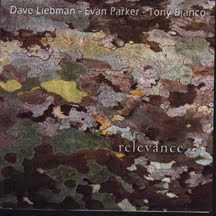
NEW RELEASE:RELEVANCE WITH EVEN PARKER AND TONY BIANCO (Red Toucan): A one time live event from London a few years ago. The liner notes will explain everything about this special occasion.

“After decades of playing with musicians from the famous to the esoteric to relatively unknown, there still exists for me a wish list of those who for one reason or another I haven’t performed or recorded with. Near the top of my list was saxophonist Evan Parker. With the help of an old friend and compatriot, Tony Bianco, we were able to arrange a gig at the Vortex in London for the BBC. Of course I have always had the utmost respect for Evan’s art, his unique technical mastery and longstanding reputation as one of the masters of the free jazz idiom. As would be expected for such an occasion we said hello, went directly to the stage and improvised two sets. I will remember this evening as one of my best experiences with a peer saxophonist. Tony as always provided the perfect flowing and consistent “carpet” for us to commune together. As Evan and I both evolved from the Coltrane aesthetic, I think that this meeting could be seen in some ways as similar to the encounter we all know of Newk and Trane on “Tenor Madness” (1957) — different approaches to a common language. (I would imagine to dedicated jazz listeners, this meeting will also be of some historical value.)”


RECOMMENDED

BUT BEAUTIFUL BY GEOFF DYER: (book)Recommended to me by Lucille Humair, this is absolutely the best book I have read on jazz. It is fictional but based on real events that happened to the likes of Bud Powell, Ben Webster, Chet Baker, Mingus, Pres, Monk and others. Difficult to explain here, the book is very well written and truly captures the feeling and spirit of what jazz really is about in human terms, through Dyer’s depictions of a portion of the lives of some of the masters. VERY HIGHLY RECOMMENDED.


IMPRO-VISOR: An excellent FREE program for beginning improvisers. Here is an explanation by Robert Keller who developed the program:
“Impro-Visor (“Improvisation Advisor”) is a software tool designed by musician and computer scientist Bob Keller to help jazz musicians work out, hear, and record solo ideas, including studying the work of others. It provides a notation capability for lead sheets that consist of a single melody line and chord changes. Melody content can be entered by a point-and-click interface, typed text, or a MIDI keyboard. Chord progressions are entered by typing the chord names or loading from an existing text file. Using the point-and-click interface, notes are sounded with the corresponding chord background as they are entered. Visual feedback is provided by an optional coloring scheme: chord tones show as black, color tones or tensions show as green, chromatic approach tones show as blue, and everything else shows as red.
A typical use of Impro-Visor is to ask students to compose a solo of one or more choruses over a tune being studied. By working out lines for the solo, a better understanding of both the tune and of line construction is acquired. In addition to the visual and audio feedback described above, there are various ways of getting suggestions for ideas, such as using scales, cells, licks, idioms, and quotes. These are part of Impro-Visor’s vocabulary and are automatically transposed to the chord of the moment. The user can then tweak the melodies as
desired or choose alternatives. Ideas can be saved in the vocabulary for later reference. In one use, students submit their solos to the instructor, who then collects them and projects and plays them in the classroom, for mutual critique.
Another feature of Impro-Visor is the ability to generate brand new licks over a chord progression selected by the user. Lick generation is based on a specific “grammar”, and different grammars can be used to get different styles. Grammars can also be used in conjunction with Impro-Visor’s play-along capabilities to support trading fours or eights with the user playing in real time. Looping over the entire chorus or a small segment is supported. The accompaniment is generated automatically from the chord changes, and various styles can be specified. Grammars can be learned by Impro-Visor from a set of one or more transcribed solos that have been entered as leadsheets. A large collection of chord changes for standard tunes is available in leadsheet form from the Impro-Visor user group. Users can also create new styles, enter voicings using a keyboard interface, etc. and generate a solo that deduces the characteristics of this solo over ANY set of chord changes

Reference links:
main page: https://www.cs.hmc.edu/~keller/jazz/improvisor/
user group: http://launch.groups.yahoo.com/group/impro-visor/
solo samples: http://www.cs.hmc.edu/~keller/jazz/improvisor/Solos/index.html
tutorial (translates to many languages): http://www.cs.hmc.edu/~keller/jazz/improvisor/ImproVisorTutorial4.htm
wikipedia description: http://en.wikipedia.org/wiki/Impro-Visor

NOTE FROM LIEB: Prof. Keller entered one of my solos which features a menu which includes choices of rhythmic feel, ratios of the dotted eighth to other rhythmic values, even noting a latin to swing rhythm, etc. I haven’t had time to get into it but this seems like a very good tool for beginners and elementary players on any instrument. So a student can write a solo on a simple harmonic progression-analyze the color codes for info on what they did and then generate a similar solo on another set of changes.
Important “code” for the transcriptions as mentioned above:
red=passing or foreign notes to the chords
green=color of complimentary "harmonious" notes of chord
black=notes in the chord

TRANSCRIPTION TOOL FOR I PHONE: I HEARIT
iHearit is an iPhone/iPod Touch app which lets you slow down music without changing the pitch, set loops, and intuitively navigate songs by touching the waveform image. Musicians can use iHearit to listen and practice along with music in slow-motion, loop difficult passages, then slowly increase the speed (even to faster than original).
Transcribe licks, patterns, jazz solos, lyrics, etc. and learn the phrasing, time feel, and articulation of the masters much more easily. Visit http://ihearit.net for info.

U TUBE:
KILLING GOSPEL: Twinkie Clarke-http://www.youtube.com/watch?v=ZXDlAZJm19Y&feature=related

LIEB SOLO FROM ”LIVE AT THE LIGHTHOUSE”: Saxophonist Steve Wirt plays my solo from this Elvin Jones live recording, ”Taurus People” at a live gig. Some real work here!! (The complete Lighthouse transcription of everything what Steve (Grossman) and I played is available through Caris Music.)
http://www.youtube.com/watch?v=DRyKcFzEXPs&feature=related

PASSINGS:
GENE LEES:
One of the most astute writers about jazz, politics and humanity in general was this man, whose Jazz Letter was a main source of vital information for the serious jazz community. Gene didn’t pull any punches and always backed his views up with real facts. In a world where good writing has is becoming more and more rare, Lees was a beacon of truth and intellect at the highest level.

ANOTHER WUNDERKIND: From Ireland (12 years old guitarist this time!!): http://www.youtube.com/watch?v=ou1vS_Kn7W0

INCREDIBLE ROYALTY: got a check for 18$ coming form the AF of M (musician’s union) “Intellectual Property Rights Distribution Fund” for my “services” recording with Miles “On The Corner” and “Get Up With It.” Imagine-thirty seven years later and I’m still getting benefits from the Prince of Darkness!!

ITINERARY
MAY:
Dave Liebman Group at the Deer Head Inn, Delaware Water Gap, PA USA; Heidelberg, Germany; tour with Michael Arbenz Trio; “Quest” concert in Santiago De Compostela, Spain; concert and clinics with “We Three” ( Adam Nussbaum-drums/ Steve Swallow-bass) in Essen, Germany and Sevilla, Spain; recording with Richie Beirach and Lee Konitz; Miles Davis tribute at Iridium with Tom Harrell and Jeremy Pelt, New York; clinics and concert at University of Cincinnati, OH.

JUNE: The Falcon, Marlboro, NY and the Lafayette Bar and Grill, Easton, PA with Evan Gregor (bass), Bobby Avey (piano), Mike Stephans (drums); 20th Anniversary Jazz Meeting of the International Association of Schools of Jazz (IASJ), Den Haag, Netherlands